
AI-Powered Cultures Require AI-Powered Leaders
Originally published in Forbes on May 14, 2026. Read the original.
Key Takeaways
- Many organizations having difficulty adopting AI aren’t struggling because of what people are doing with it, but because of how their leaders are leading with it.
- Too many leaders ask “What can AI do to make my people more efficient?” instead of “How can AI help me be a better leader?”
- Leaders can use AI as a coach, a negotiating partner, a board-meeting prep tool, a way to synthesize market data and a brainstorming assistant.
- Karrikins Group calls visibly modeling the way “leader activation.” Three practices: build your AI fluency, share your learning and ask the difficult questions.
When I first started working after college in the early 1990s, personal computers were changing the workplace in dramatic ways. Some jobs were going away and new ones were being created. We were all learning about things like word processors and spreadsheets (anyone remember WordPerfect or Lotus 1-2-3?) that were taking over in areas like finance, marketing and administrative support. What people were doing at work was going through a seismic disruption the likes of which many of us in the workplace had never seen.
Today, we see similar impacts from AI becoming a reality of everyday use in the workplace. Just like the move from mainframes to PCs brought the power of computing to everyone (not just the “computer nerds”), AI is now bringing the power of large language models (LLMs), AI agents and deep computing to everyone from my parents who are in their 80s to colleagues at work to the middle-schooler working on math homework.
The doing of work differently tends to capture a lot of attention, especially when the focus is on efficiencies that could result in job losses. That’s appropriate, but I believe it is also short-sighted. Right now, among the clients we work with, many having difficulty adopting AI aren’t struggling because of what people are doing with it, but because of how their leaders are leading with it.
The Stances Leaders Take On New Technology
Too many leaders are asking, “What can AI do to make my people more efficient?” instead of asking, “How can AI help me be a better leader?” As a result, they’re spending millions of dollars on AI technologies for other people without fully understanding how AI should be impacting them. They aren’t learning to harness the power of AI for the work that they do.
I’ve found that this is often because of a deeply held mindset that AI is great for other people but can’t replace leadership. To me, it is reminiscent of the 1990s leaders who refused to learn how to type because that was someone else’s job—usually a secretary. Typing was seen as beneath their pay grade, and it was not a good use of time to do it themselves. Instead, many used a Dictaphone and handed over tapes to someone who would transcribe and organize their written communications.
Some, however, did lean in and get their hands on keyboards, embracing the freedom to quickly and independently communicate their thoughts, decisions and directions. These business leaders were making decisions and moving forward while those who opted out of learning about PCs struggled to reply to emails in a timely manner. By the end of the decade, forward-thinking leaders were getting on instant messaging and connecting directly with each other, while colleagues who couldn’t keep up were left behind.
How Leaders Can Use AI For Self-Improvement
I believe leaders who harness AI to improve their skills and processes at work are already gaining an advantage over those who treat AI as good for everyone else but unimportant for them. Instead of limiting themselves to small steps like automating inbox cleanup, they are learning to write great prompts, leverage different AI platforms and engage with AI as a thought partner.
There are numerous ways in which you can use AI to hone your personal leadership style. For example, I’ve seen leaders navigate challenging situations by using AI in the following ways:
- As a coach to prepare for a tough conversation with a colleague
- As a negotiating partner that can generate options for working through possible areas of friction
- To prep for board meetings by anticipating likely questions from board members
- To synthesize market data and incorporate it into strategy work more effectively
- As a brainstorming assistant for analyzing and improving structure, processes and opportunities
Modeling AI Use For Your Team
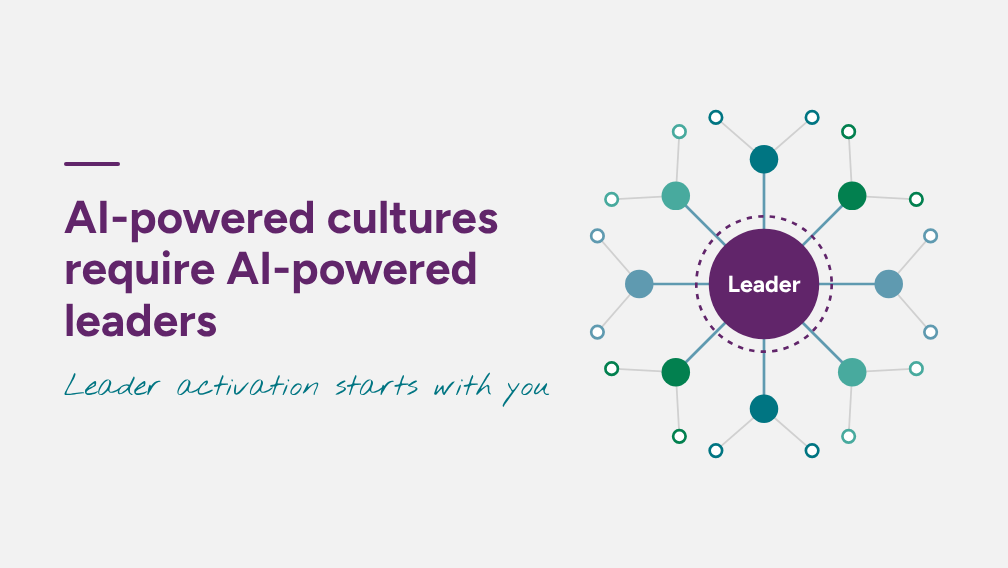
When leaders opt out of engaging with new technologies because they don’t see the application in their roles, it can hold back adoption and learning for the whole organization. I have found that in order to accelerate AI infusion into a company’s culture, leaders need to visibly model the way for their people. At my company, we refer to this as “leader activation” in organizational transformation. By activating their own growth, AI-powered leaders can lead the way for others to do the same.
Here are three ways you can begin practicing leader activation:
- Build your fluency in AI. Learning the language of AI can help you understand the challenges, demonstrate competency and build faith in the tools. What’s more, taking these steps yourself signals to colleagues that understanding and learning AI is not optional in your company.
- Share your own learning and growth with others. Being able to share first-hand experiences of how you’re learning to leverage AI capabilities and tools signals to the rest of the organization that you’re taking AI seriously. This can also be an effective way to build a more comfortable space for your people to share their own challenges and learnings.
- Ask the difficult questions. Demonstrate your understanding of and commitment to using AI tools by asking hard questions and inviting others to ask them of you. This can help you and your team recognize weak spots in AI applications and deepen your knowledge of the technology’s strengths and weaknesses within your company’s processes, creating an AI-powered culture that can continue to learn and grow with the technology.
Final Thoughts
If you are wondering what AI means for you, consider what your job would be like if you couldn’t use a keyboard. You’d be behind on everything! Don’t let this technology wave wash over you; instead, take control and ride it by committing to being an AI-powered leader who is fueling an AI-powered culture.
Frequently Asked Questions
How do you align a leadership team on AI strategy?
Start with leaders’ own use of AI. Julie Williamson, PhD, CEO of Karrikins Group, finds that when leaders opt out of new technologies, it holds back adoption and learning for the whole organization, so leaders need to visibly model the way. She recommends three practices: build your fluency in AI, share your own learning and growth with others, and ask the difficult questions about AI’s strengths and weaknesses within your company’s processes.
What is leadership activation?
Leadership activation, which Karrikins Group calls “leader activation,” means leaders visibly modeling the way for their people during organizational transformation. Applied to AI, Julie Williamson explains, “By activating their own growth, AI-powered leaders can lead the way for others to do the same.” In practice, that means building AI fluency, sharing first-hand learning and asking hard questions so the whole organization keeps learning.
Why do AI adoption efforts stall?
In Julie Williamson’s experience, many organizations having difficulty adopting AI aren’t struggling because of what people are doing with it, but because of how their leaders are leading with it. Leaders often hold a mindset that AI is great for other people but can’t replace leadership. As a result, they invest in AI for their teams without learning to harness it for the work that they do.
How can leaders use AI themselves?
Leaders can use AI to hone their personal leadership style, not just to automate inbox cleanup. Julie Williamson has seen leaders use AI as a coach to prepare for a tough conversation, as a negotiating partner that generates options for working through friction, to anticipate likely questions from board members, to synthesize market data for strategy work, and as a brainstorming assistant for improving structure, processes and opportunities.