
How to Navigate the Space Between Trust and Confidence
Originally published in The CEO Magazine on May 22, 2024. Read the original.
Key Takeaways
- Many trust issues in the workplace are really confidence issues. Trust is a belief about someone’s motivations. Confidence is a belief about their capabilities, experience, positional authority or training.
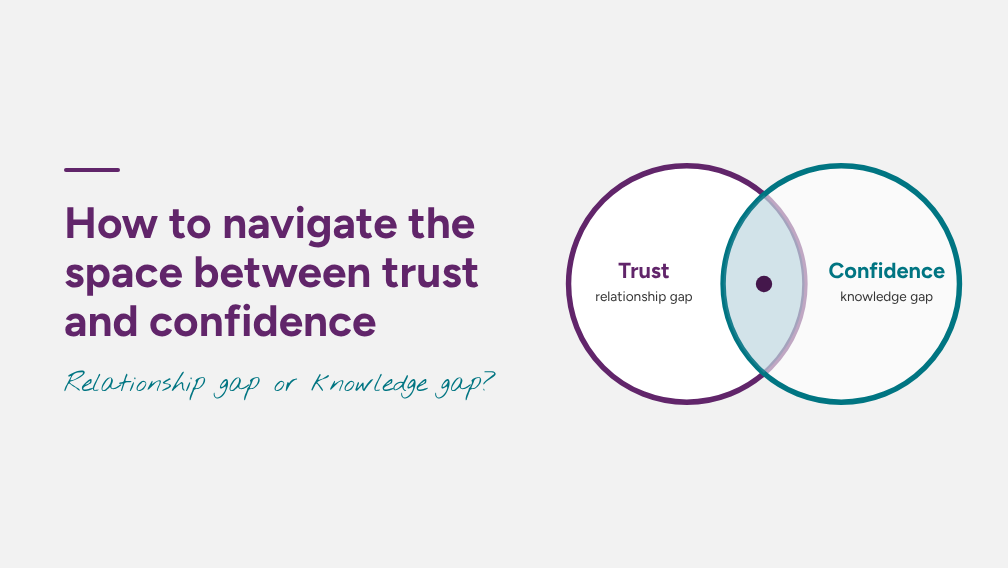
- A trust problem is a relationship gap. A confidence problem is a knowledge gap. Each one needs a different fix.
- Neither can be solved alone. Both take communication, connection and shared experiences.
- You can have both at once, and each needs to be addressed in its own way.
Have you ever felt like there’s a ‘trust issue’ in your team or organization? It is a pretty common sentiment for people in the workplace.
Trust finds its way into values and other ambiguous declarations and claims on a frequent basis – and people make big, sweeping statements like, “We just need to trust each other.”
But trust is a big word. It is laden with meaning for most people. Imagine if someone said to you, “I don’t trust you.” It is like a punch to the gut. It feels like a deeply personal comment on your character. I often hear that extended to groups – “There isn’t trust between our teams” – as a way of explaining why collaboration or cooperation is in short supply.
I encourage people to get very specific about what they mean by trust. Is it a question of character of the other person, or is it doubt in their capabilities? Often what starts out being articulated as a trust problem is actually an issue of what I think of as confidence. Shifting the language just a little bit opens up a whole new way to talk about the problem and different ways to solve it.
Trust versus confidence issues
In the context of the work I do, I think about trust as being relationship based – it exists between two or more people and represents a set of beliefs about the others, especially around their motivations. Confidence is a belief about an individual’s capabilities, experience, positional authority or training. By separating the two, we can create different conversations.
Imagine, for example, that you are waiting on a colleague to allocate resources to support one of your initiatives. Your colleague has been delaying, and it is impacting your ability to move forward. You have a choice in this situation about how you might accurately describe your feelings:
- “I don’t trust my colleague to help me out by allocating the resources.”
- “I don’t have confidence in my colleague’s understanding of the situation.”
Those are two very different ways of articulating what you believe to be the problem. If you don’t trust your colleague’s motivations, you have a relationship issue that requires investment of time and energy from both of you to connect, build a common bond and appreciate each other.
If you don’t have confidence in your colleague’s expertise, you have an issue of clarity and connection to the situation that can be addressed with information, data and support.
One way to tease apart whether you have a trust or a confidence issue is to think about trust as having to do with intention, integrity, values, well-intended, caring and a team-first orientation. Think about confidence as about ability, capacity, prioritization, knowledge, experience and business acumen. One is a relationship gap; the other is a knowledge gap.
By taking the time to get clear for yourself about what you believe your challenge is, you can more effectively work to solve it with your colleagues. Note, however, that neither trust nor confidence can be solved unilaterally. These are both issues that exist between two or more people, and so they can only be solved through communication, connection and shared experiences.
Solving the problem
If you decide you have a trust problem, you can try getting super curious about them as individuals, as leaders and as colleagues:
- Have an in-person or virtual coffee with them, and simply take time to get to know them better.
- Learn about their priorities, how they see the organization as a whole and where they fit in.
- Talk with some of the people around them to try to get a better understanding of their motivations.
If you have a confidence problem, you can help close gaps that you see:
- Check in and see how they are doing, and ask about what resources they are using to make their decisions.
- Offer to make time to help them come up to speed on broader issues that go beyond their immediate space.
- Bring them into conversations with your team or group so they can hear firsthand about the challenges you are experiencing.
Remember that even if you think a colleague can’t do their job, they are in the role, so you can either figure out how to support them, or be an untrustworthy colleague yourself. Don’t let your belief about someone else change how you show up with an enterprise mindset, ready to do the right thing for the organization, even if it is tough on you or your team.
It is entirely possible to have both a trust and a confidence problem, in which case you need to address both of them, but in different ways.
The important thing to realize is that how you solve for a trust issue is different from how you solve for a confidence issue. By being more precise about the problem, you can better address it and move forward productively.
Frequently Asked Questions
How do you handle trust issues in the workplace?
Start by getting specific about what you mean by trust. Julie Williamson, PhD, CEO and Managing Partner of Karrikins Group, finds that what gets called a trust problem is often a confidence problem. Ask whether you doubt the other person’s character and motivations or their capabilities. A trust gap calls for time and relationship-building. A confidence gap calls for information, data and support.
What’s the difference between trust and confidence at work?
Trust is relationship based: a set of beliefs about another person’s motivations, intention, integrity, values and team-first orientation. Confidence is a belief about their ability, capacity, prioritization, knowledge, experience and business acumen. As Julie Williamson puts it, “One is a relationship gap; the other is a knowledge gap.” Separating the two opens up different conversations and different ways to solve the problem.
How do you build trust with a colleague?
Get curious about them as an individual, a leader and a colleague. Julie Williamson suggests having an in-person or virtual coffee to get to know them better, learning about their priorities and how they see the organization and their place in it, and talking with people around them to understand their motivations. Trust exists between people, so it can only be built through communication, connection and shared experiences.
How do you fix a confidence problem with a colleague?
Help close the gaps you see. Check in on how they are doing and what resources they use to make decisions, offer time to bring them up to speed on issues beyond their immediate space, and bring them into conversations with your team so they hear your challenges firsthand. Even if you doubt a colleague’s ability, Julie Williamson notes, they are in the role, so supporting them beats becoming an untrustworthy colleague yourself.
Can you have a trust problem and a confidence problem at the same time?
Yes. Julie Williamson notes it is entirely possible to have both, and when you do, you need to address both of them in different ways. Work on the trust gap through curiosity and relationship-building, and on the confidence gap through information, data and support. Being precise about which problem is which is what lets you move forward productively.